Follow me on social media!

Twitter: @Clare23Ritchie
Instagram: @to_the_ends

Saturday, 20 January 2018

The Greatest Showman


Hi Guys,

I just posted a serious post but now I want to talk about something that I am loving. The Greatest Showman. It is an original musical that came out on Boxing Day and I have seen it three times in the cinema. I went with my family, I went with a bunch of friends and then I went by myself and I just love it. This post is probably a little bit useless now, if you want to see it in the cinema because, at least where I live, it is starting to leave the cinema or has already left it, but you can get it when it comes out on DVD, which I can't wait for. :):):):) And when I went to see it with my friends at the cinema, two of us knew all the lyrics already and we were just singing along and it was amazing. (No one else could hear us because we were sitting away from the other people in the cinema.) 

In case you have no idea what I am talking about, the Greatest Showman is based on the story of PT Barnum, the man who invented the circus and also the whole idea of show business. It has an amazing cast: Hugh Jackman, Michelle Williams, Rebecca Ferguson, Keala Settle (who sings This is Me), Zac Efron and Zendaya. Before I say anything else, I think that it is safe to say that the film is LOOSELY based on his life. Yes, they talk about his wife and his children and the circus and the fact that he found 'unusual' people but, at the same time, they smooth over a lot of details. PT Barnum was about 60 when he started the circus and also the circus was not the best place, morally, in that sense. In the circus, animals and people had to endure horrific treatment and they were excluded from society for being different. If you want to see an accurate representation of the treatment of people who were different and shunned from society, I think The Elephant Man is a better film but, at the same time, I don't think that the purpose of this film is to accurately represent his life. I think that the point is to celebrate difference and uniqueness and PT Barnum definitely did that.

The soundtrack is the best bit, without a shadow of a doubt. In fact, even critics that don't think the story line is solid or believable, (although, personally I have no problem with it) admit that the songs are great. They are the kind of songs that you just want to start singing the minute that you leave the cinema and, once you have learnt the lyrics, they just have so much meaning and are so emotionally charged.

The theme song of the film is 'This is Me' and Keala Settle sings it and it is so beautiful and the song actually won a Golden Globe, earlier this month. And below is a video in which I think she sings it best:


And this one is amazing as well. 

So check it out, if you like musicals and hopefully you will enjoy it as much as I did :D

Clare 


Mayim Bialik: Being a Feminist in Harvey Weinstein’s World

Hi guys, 

I just wanted to share this article. It was published last October but I only came across it recently and I think that it is a very interesting read. A lot of people criticised Mayim Bialik, (who plays Amy Farrah Fowler on the Big Bang Theory, an American sitcom) for what she said but I personally agree with her. 

Hopefully, the exposure of Harvey Weinstein and the subsequent Time's Up campaign will show sexual predators that people are not going to let them get away with this abuse anymore and victims of sexual abuse and harassment will know that they can talk about their experiences, as this has not always been the case. Recently, Simone Biles spoke up and said that she had been sexually abused by the US Gymnastics Team doctor, Larry Nassar so it seems like society is slowly creeping towards the right direction, although there is still so much to do, in a world where the objectification and abuse of women is still so common.  

Anyway, you can check out the links below. 

You can read the article HERE

You can find out more about the Time's Up campaign HERE

Clare 

Friday, 24 November 2017

Fallen by Lauren Kate/Books vs Films in general/Bechel Test ???

Hi Guys,

Another book review.

I recently started reading Fallen by Lauren Kate. This is a young adult romance/fantasy novel based around the Biblical story of Lucifer's fall from Heaven.

I saw the film on Netflix and started watching it just from the description and I didn't really enjoy it. It had sounded very interesting and a bit like Hush, Hush, (which is also about fallen angels and is very good) but it was a bit slow for me and the script wasn't brilliant.

So, in typical ME fashion, I went online to read some of the reviews from critics and other people who had watched it, just to see whether I had missed the point of the film. I saw a lot of reviews from people on Goodreads and other websites, saying that the books were so much better and they hadn't liked the film because it didn't do the books justice. So, I was very excited, because, 9/10, I enjoy the book much more than the film and I find that the films often can't capture the unique nature of the book. (e.g. The Mortal Instruments, Eragon, The Percy Jackson Series ...


***Actually, on a side note, this is something that has always annoyed me about film adaptations of books. If a book is very popular and does very well with audiences, why would a film company think that they will have the same success by taking that name, (and everything that is associated with it) and changing the story line so drastically that it doesn't even resemble the book anymore. *cough, cough* PERCY JACKSON - SEA OF MONSTERS. That wasn't the ending in the book, why would you do that?!  I understand that a film can't include EVERYTHING, obviously, but it shouldn't try and make a new story and new characters, unless it explicitly says that it is only BASED on the book, and not trying to make an ADAPTATION. And, along the same lines, if it isn't trying to be explicitly about the book, they should make that clear to the audiences beforehand.***

Anyway, rant number one over. Moving on to rant number two. :) So, Fallen. OF COURSE, IN MY REVIEW, THERE WILL BE SPOILERS.

It is the story of a girl called Lucinda, (or Luce) and she has to go to a rehabilitation school, because of her association with the death of a boy that she liked. His name was Trevor. She can also see these strange 'shadows' that have followed her around for her whole life. She has been on medication for hallucinations and mental illnesses. At the school, she quickly meets two boys who both attract her, Daniel and Cam. Luce is almost immediately attracted to these two boys at the school. She feels a strange connection to Daniel but she can't explain it. He is also very mean to her. Cam is very nice to her and is clearly attracted by her in some way.

This was a very popular book when it came out in 2009. It was a bestseller and there was a lot of hype around the film etc. There are also great review in the book from other authors and so I was very excited to read it.

To be honest, I haven't finished reading the book and I don't want to make assumptions from the film but I have read about 2/3 and I have some opinions about it that I want to share. They know that they might be slightly harsh :/


1) I don't like the portrayal of the 'love triangle'. Luce is presented as a very insipid, needy, whiny kind of girl and all of her thoughts, all the time, are taken up either thinking about Daniel or about Cam. To put the extent into perspective, in one scene, she is at a funeral of a boy called Todd. Todd died in a fire caused by the shadows that follow Luce around. It is a very serious moment. It was the way that the other boy Trevor died. (Actually, in the film, this was one of the scenes I did like.) Luce's best friend, Penn, liked Todd and is distraught. And Luce is thinking about the flowers that Daniel sent her. She is still trying to choose between Cam and Daniel, right there in the middle of the funeral. I just find these types of female protagonists to be so annoying. I am not saying that every book needs to pass the Bechdel Test or be directed at a pure feminist crowd, but this persistent representation of (usually) girls who just lose their minds over a boy is just something so archaic to me that we should try and get rid of.

2) Daniel is so mean to Luce and Luce likes him anyway. In their first encounter, he gives her the middle finger and, every other moment they meet for about half of the book, he makes it clear that he doesn't want anything to do with her. She shouldn't like him or want to be in a relationship with him. It might sound very old fashioned or naive but I don't think that this is a positive message or positive idea about a relationship for our society. As they end up together, it almost 'justifies' the way he treated her and the way she obsessed over him and, personally, it just makes me annoyed.


I know that I am probably reading too much into it and, if that kind of romance genre and story line is something that you enjoy reading, then you may love this book. I will say that I have bought the second book in the series and I will finish Fallen, despite my complaints about it because I do want to give it a chance to redeem itself. However, I do stick by my opinion about the shallowness of the whole story, on the romance front and how much it annoys me. I just think that is perpetrates the stereotype that if a boy likes a girl, he has to be mean to her and that should keep the girl interested. I don't think that should be something that we promote.

Anyway, just some food for thought as always,
DISCLAIMER : I love books and I love reading and most authors work very hard on their novels and try and come up with something original and enjoyable and I commend that. :D

Clare 

Tuesday, 12 September 2017

Homemade Rice Bowl Recipe by Me :)

Hi guys, 

Back again with a cooking post! I am very excited about this one because I made it myself and it has taken a couple of failed attempts to get it right. It's a vegan rice bowl, but you can make it vegetarian by adding some scrambled eggs, for extra protein. It is great to take to work or school for a delicious and nutritious lunch or eat at home for dinner. You can experiment with different herbs and spices to make a combination that you like and even change the combination of fresh vegetables that you use to incorporate some that you prefer. (Personally, I don't like cucumber with rice because I think it goes soggy. :/) This dish serves two people, give or take. One person can eat it or it could be divided between three. It depends on how hungry you are! :D It only takes about twenty minutes to make (depending on how long your rice takes to cook) and it is very easy to prepare. :) Here goes. Hope you enjoy!


Ingredients 

  • Half a cup of rice (brown or white)
  • Two tomatoes 
  • One large pepper 
  • One large avocado
  • A few black olives (I usually put about 10 in mine)
  • Salt 
  • Pepper 
  • Spices/Herbs of your choice. Think about using herbs and spices that you would put 1) in salad like parsley or coriander or even basil and 2) things that you would use to spice up rice like chilli or maybe a little soy sauce. I use a few chilli flakes and lots of coriander.
  • (Vegan) Bouillon (If you aren't vegan, you can use chicken/beef stock. If you don't usually put bouillon in your rice, add some salt instead.)
  • OPTIONAL: One egg and two tablespoons of milk to make scrambled eggs


Other Assorted Tools 
  • One small saucepan 
  • One strainer 
  • A sharp knife 
  • A large bowl for putting everything in.  
  • Forks and spoons for stirring 
  • OPTIONAL: A frying pan and mug for the egg
1) Put one teaspoon of bouillon and half a cup of rice in a saucepan and fill with boiling water. Cook at a high heat. 

2) While the rice is cooking, chop up the tomatoes, pepper and avocado and put them in the bowl. Add the olives. Don't stir everything until the rice is added at the end because it can get 'soggy.' *TIP* Cross-hatch the avocado while in the skin and then scoop out with a spoon for nicely sized pieces. 


3) OPTIONAL:  Break the egg into a mug or small bowl. Add two table spoons of milk. (Add some pepper and coriander  - or the spices/herbs of your choice) Scramble at a low heat. Add to the bowl.

*If you have time, you can wait until the rice is cooked before scrambling the egg. Put some oil and onion in the frying pan, add the rice and pour the egg on top. Fry at a low heat and then add to the bowl.*

4) Add the spices/herbs that you have chosen to the bowl. I've added two pinches of chilli flakes, coriander and lots of pepper. (I love pepper :))


5) Once the rice has cooked, strain it well and add it to the bowl. Sprinkle some salt and pepper on top

6) Stir well! 


Enjoy! 

Clare :) 


Sunday, 3 September 2017

Rebooting, Reviewing and Cloning

Hey guys ...

Long time, no see. I'm kick-starting this blog again. With a book review. I just finished reading Never Let Me Go by Kazuo Ishiguro. This book has been sitting on my shelf for a while and I finally got around to reading it. First of all, I had to persevere with it. In fact, when I first starting reading it, I stopped because I didn't get the story line but then I came back and I can assure you it is a very good book. :)

A little synopsis: Never Let Me Go is set in a skewed modern English society. It follows the lives of three children, Kathy (the protagonist who narrates the story), Ruth (her best friend) and Tommy, growing up in a boarding school called Hailsham. Hailsham is completely isolated from the rest of the society. From the beginning of the book, you can tell that something isn't quite right about the school and the society that they grow up in from the way that Kathy recalls her childhood and subsequent teens there. Through the book, Kathy reveals what the society is like and raises very interesting moral issues, questions and dilemmas about the modern world.

Okay, a heads up. I am going to discuss some of the most interesting themes for me in the book but that means that there WILL BE SPOILERS. So maybe go and read the book first and then come back or proceed, whichever you prefer. :)


The most interesting part of the book for me was the question about clones. SPOILERS!!! In Never Let Me Go, the children in Hailsham are clones of members of society and, when they get to a certain age, they start donating their organs and they eventually die. So, basically, they exist solely to harvest human organs. During my Spanish and French A level courses, I had to do some research into animal cloning and human cloning. Is it okay to clone humans? Should we clone ourselves in order to have a 'second chance' at life? Is it okay to use clones to harvest organs, as in this book?
In our world today, people clone their pets in order to have more time with another identical version of their dog or their cat and animal cloning is widely used in different industries. The key issue when discussing human clones is whether they deserve the same rights as 'normal' humans and whether they are capable of experiencing the same things as humans, on a physical and emotional level. Now, if clones are NOT capable of feeling or experiencing the same emotions as 'normal' humans, perhaps using them as donors and harvesting them as such is okay. Food for thought ... Personally, I don't agree with using cloning like that because, for me, it assumes a higher place than what humans should have.
But, the thing about this book that was quite chilling for me, was that we didn't discover that they were clones until we had seen them experience the same complicated emotions that we do: anger, happiness, frustration ... etc. Also, they were already resigned to their fate. They had no realistic aspirations for their lives because they knew how they would play out and how they would end, from very little children. They would joke around about being a doctor or a movie star or even a secretary or assistant and a teacher would say that they had to stop thinking like that. Their lives and their purpose was predestined and there was nothing that they could do to change that. Just think about that. Imagine waking up and knowing that your whole life had been determined and none of your hopes and aspirations meant anything.


Another very interesting theme for me was the role of art and creativity in the book. As someone who has always preferred more creative subjects at school and wants to be an author, creativity is very important for me. In Hailsham, creativity played a crucial role. The children were valued by the teachers and by the other students based on the quality of what they could create and write and draw. One of the main characters, Tommy, isn't very good at all of these things and he is bullied, quite viciously for it. But, the key thing here is that the teachers were looking at their art work to reveal their souls. I know that sounds overly dramatic but, in other words, they were trying to work out whether the clones had the emotion to create art, in whatever form that took. In the book, it is revealed that there were other boarding schools like Hailsham  but none of them used art in the same way. Hailsham was an experiment in itself, to prove that the clones had the ability to be like 'normal' humans.
At certain times throughout history, in Communist Russia and Franco's Spain for instance, the teaching of art and creativity was prohibited because it encouraged people to think outside the box and challenge ideas and therefore the government. There is a very interesting story about a Russian composer who wrote a piece for a orchestra that was literally three or four notes and the last page was a page of the same note, over and over again. Looking at that, we see huge restrictions but it shows the extent to which we, as humans, create and appreciate creativity.
At the moment, there has been a lot of talk about cutting school funding for creative subjects and pushing forward Maths and Science. For me, this is very sad. I have never been good at Science and I was abysmal at Maths. I don't have a very logical brain and I think that by cutting that funding, we limit, as a society, the ability to do something that makes us inherently human.
The society in the book saw clones as evolved computers. They could function by themselves, they could live a 'normal' life but they couldn't appreciate things as humans. Hailsham saw them as more than that and that's where the importance of art came in. The clones could create beautiful things and appreciate the world around them in a way that is exclusive to human beings, showing that they were more than just donors. They could be people, like everyone else.


Anyway, I hope that made sense and I hope that it made you think about a few things. I just read through it and realised that it is a lot of rambling but hopefully you took a few things from it.

I believe that there is also a film of Never Let It Go with Keira Knightley, Carey Mulligan and Andrew Garfield. I've never seen it but maybe that is something that you would like to look into before/after reading the book.

As usual, thanks for reading,
Clare

Thursday, 31 March 2016

Tanya Burr's Healthy Chocolate Brownies ... by Clare

Hello everyone,

Easter is finally upon us (yay!) which means that I can eat chocolate again (YAY!). And I was browsing the old videos of my favourite YouTubers when I came across this video by Tanya Burr where she makes brownies that are apparently 'healthy'. (Obviously, not as healthy as vegetables but healthier than the classic brownie in the supermarket.)

Normally, I don't like cooking videos because the skill of being able to cook and enjoy it has eluded me and graced other members of my family. But this one I was interested in because when I see online tutorials for anything and then attempt them, their finished product is so much different to my finished product. But this one I tried. I'll link her video because I changed three things about her recipe: I used LO Salt instead of Himalayan Salt, brown sugar instead of coconut sugar and half a cup instead of two. This was because I didn't have Himalayan Salt when I was making them and my family as a whole don't use a lot of sugar in our cooking, even if they say we should.

Tanya's video: https://www.youtube.com/watch?v=vtwBjpFoZow
Apparently, the recipe is also available in her book which you can get here

Ingredients I used:
1. 300g of organic Green and Black's Dark Cooking Chocolate
2. Half a measuring cup of pure virgin coconut oil
3. One cup of FairTrade light brown sugar
4. Two cups of ground almonds
5. A pinch of salt
6. One capful of vanilla extract (a capful being the cap on the vanilla extract, not the measuring cup)
7. One teaspoon of baking powder
8. One mashed avocado (a soft, ripe avocado would make this easier. You can't taste it because it is a second substitute for butter.)
9. 3 eggs

Other stuff (because I always find this useful in recipes so that I can get it ready)
1. A large saucepan
2. A wooden spoon/spatula
3. Measuring cups of different sizes
4. Three spoons for scooping and stirring and mashing
5. Two bowls (one for eggs and one for avocado) OR One bowl (for avocado) and one mug (for eggs)
6. A baking tray (made for cooking brownies, NOT cakes)
7. A knife
8. Oven gloves

Instructions:
  • Pre-heat the oven to 180 degrees Celsius
  • Pre-mash the avocado. The best way to do this is to cut it in half, take out the stone, scoop out of the flesh of the avocado and put it in a bowl. Use a knife and spoon to mash it and chop it as much as possible but don't worry about chunks because once it is stirred in and cooked, you can't taste it anyway.
  • Pre-crack and beat the eggs, depending on your ability to do this. I am very bad at cracking eggs so I did it before starting.
  • Use the spoon to put half of measuring cup of coconut oil in the saucepan
  • Break up the chocolate in good sized chunks and add it in to the saucepan
  • Melt the chocolate and oil together on a LOW HEAT and stir with the wooden spoon/ spatula so that it doesn't burn
  • REMOVE FROM THE HEAT
  • Add in the brown sugar and stir
  • Add in the ground almonds, baking powder, vanilla extract, salt and avocado, stirring well after each ingredient to ensure the mixture is as smooth as possible (by this point it will not be completely smooth)
  • Add in the beaten eggs and stir. (I found a folding motion to be the best way of doing this. It also means you can mash any stray chunks of avocado that are particularly and ominously large.)
  • Pour into the baking tray and put it in the oven for 26 minutes.
  • Leave ten minutes to cool and then chop them up into good sized brownies.
NOTE: they are very rich in consistency so keep them small.

My ingredients


And there you are! You wouldn't believe how much difficulty I had trying to put all of these pictures into this blog post. :/ It was a struggle.
Anyway,

Thanks for reading, 
Clare


Sunday, 24 January 2016

Changeling by Philippa Gregory

Hello everyone,


It has been a while, I know. :( I didn't intend to keep off blogging for this long but stuff happens, I guess. But I'm back now with another book review. Surprise, surprise! I have to admit that recently I have ordered a lot of books online (around about 20), and a lot of them were by the same authors so I'm afraid my blog will start to look like a shrine. But that doesn't matter. Anyway ... on with the review.
So I read Changeling by Philippa Gregory. It is part of a trilogy called the Order of Darkness trilogy. I have to say that I was a little tentative about reading it, simply because I LOVE Philippa Gregory's books on the Tudor and Plantagenet periods and I was worried that it might not live up to my expectations. I was completely wrong about that. Changeling is set in the 1400s and tells the story about a boy called Luca Vero, who has to travel across the country, finding about what makes people scared. This is at a time when people are scared about the end of the world. There was a great fear of witchcraft and of the Devil possessing people and religion was used as a means of controlling the common people and getting them to do things. Luca travels to a convent where the nuns believe that they have been possessed and Luca has to find out what is going on.

Some themes in the book...
I think I have already done an overall theme about religion when talking about Purple Hibiscus  so I won't talk about that again. Instead, I am going to talk about fear and ignorance and the role that they play in society and control. It is a really important part of the book. The nuns in the convent are scared that the Devil has come among them and is possessing the sisters. The people in the village are scared of the werewolf. A generalisation is that people are scared about things that they don't understand or can't make sense of. One of the characters is a Muslim, in a time when Muslims were seen as heretics and pagans and Islam was very 'dangerous' because it threatened the spread of Christianity in Europe and into the Middle East. It is clear that because they don't understand her beliefs and who she is, they associate everything else that they fear with her. Not only that, but they are encouraged to do so by the bishops and the lords and those people in charge who are also scared about things that they don't understand. And now, in this day and age, although I would like to think that we don't fear so much Satan walking among us, we do have a tendency to avoid or be afraid of what we don't understand. Fear is a perfectly natural reaction to things but, as a race, we sometimes take it out of context and blow it out of proportion. Racism, particularly in the wake of terrorist attacks, can stem from ignorance which results in fear and aggression. We are scared by what we see , naturally, and we want to understand it, so we blame someone in order to personify our fear and make it seem less scary. We are scared of an apocalyptic cult that wants to destroy the world and so we blame someone innocent to reduce the anonymity of it. Obviously in the past, at the time when this book takes place, the higher, intelligent elite used religion to scare the people into submission. 'Do this or you are going to Hell.' 'Your king has been elected by God and therefore you have to follow him' 'His law is God's law'. But similarly, people didn't understand religion in the way that they perhaps understand it today because many of the religious books were in Latin and/or people couldn't read. So fear of Hell for them was real and therefore, they did as they were told.

Recommendations

The Virgin's Lover by Philippa Gregory
This is an amazing book by the same author about Elizabeth I, her assumed affair with Robert Dudley and the scandal that surrounded the death of his wife Amy Dudley.

Wonder by R.J. Palacio
On the theme of fear in a present day setting, this is a beautiful book about a boy who was born with a facial deformity and has to go to school  and face all of the stigmas that are associated with being different.

And that's the end of this post. :) I hope you enjoyed it.

Clare

Monday, 28 September 2015

A sweet little word

Hey everyone,
Yes, I am very aware that my last blog post was in August. Whoops! Stuff happened and then new school happened and then A levels happened and this is the first evening so far that  don't have mountains of homework that requires immediate attention. Hopefully, I will be able to get back into blogging a bit more now that I am able to manage work better. Fingers crossed! But I haven't been able to do a lot of leisurely reading recently as all my reading time has been taken up with school reading (and there is a LOT!) But enough excuses!
Anyway, today, I just wanted to discuss an idea that someone mentioned to me at school a couple of days ago. It was that you can never completely know your mother tongue, whatever that may be. For me, that is English.
Of course, when you meet someone that says that they are bilingual, you immediately assume, as correctly defined in a dictionary, that they can speak two languages fluently. But to what extent do you understand the word 'fluent'? Does it mean that they understand and know and use all the language? And isn't it interesting how we assume that it does, when, defined straight from the dictionary, it only means a high level of accuracy in the speaking, writing, reading and listening of a language
I study French and Spanish at A level and I hope, by the end of the two years, that I will reach a suitable standard in order to converse with natives of different countries in their own language with relative ease. But I will never speak all of the language, no matter how much I study, and in the same way, despite saying that English is my mother tongue, I don't know all of the English language and I never will, no matter how much I study it. This is because there are certain areas in the English language, be them colloquial or intellectual that I will never study and never be able to study in enough detail in order to give me the right to say that I speak all of the English language. I have given up all sciences and so there will be science terminology that I will never learn , that I will never need to know but that are part of the English language.
Also, it is very easy to say, 'Well, just study English everyday, all day, until you learn the whole thing; study the dictionary.' But language changes with culture and with generations. Already, as an obvious example, the word 'gay' has a different meaning to the meaning it had a while ago. So, while I might feel that I need to spend all day every day studying the English dictionary of 2015, by 2016, it will have changed and my knowledge will be incomplete again. I suppose another point is that language defines culture and vice versa. When humans had only mastered limited distinguishable sounds, their culture was something completely different. So, in order to know all the language, you must learn all of the culture and that as well is impossible.  
Okay, that's all. Just a little thought that I wanted to share. It interested me a lot.

Clare
       

Friday, 21 August 2015

The Houses of Parliament and a sprinkling of sheep

Hello everyone...

Hanging in Westminster Hall
So I just spent the last four days doing my Silver DofE expedition in Wales. I had intended to post this before I left but there wasn't time to finish it. I also have noticed that I have only done one book review  this month, although I have read other books so maybe I will post another one today sometime. And can I just say that Wales is such an underrated country. I love hills and mountains (although maybe not climbing them) and Wales has a beautiful skyline. At least, the west coast does. And the forests that we walked through looked like a combination of Narnian forests and the Lord of the Rings. Also, there are so many sheep. And some sheep got loose from their fields and could be seen just walking away along the footpaths, going on their own little expedition. We actually did climb a mountain because we climbed up to 610m above sea level which is when a hill becomes a mountain.

But, back on track. On Saturday, I went to the Houses of Parliament. I have been there before but I went when I was about six or seven and I don't remember much at all except that everything seemed very big and very boring. So I decided to revisit...

The Houses of Parliament
(And also, in front of the Houses of the Parliament, there was a big celebration because on the 15th August, 70 years ago was the day that the Japanese surrendered and World War II officially ended.)


The first part that I saw was Westminster Hall. It is the oldest part of the Houses of Parliament and is about 900 years old, having survived the Great Fire of London. It was originally built by the son of William the Conqueror in 1099 and then it was remodelled by Richard II. When it was built, it was the biggest hall in Britain and possibly Europe as well. There is a huge stained glass window at either end of the hall, which made taking photos really difficult due to the very bright light but the roof is gothic architecture.
On the floor, there are lots of plaques that commemorate different people and historic events, such as St. Thomas More and Winston Churchill. The Queen's mother lay in state there before her burial and various people were acquitted of crimes as the law courts were there for 700 years before they were moved to the Royal Courts of Justice. Lots of famous trials took place there. For instance, William Wallace was a Scottish nobleman who fought against Edward I. He was captured in 1305 and tried in Westminster Hall. He pleaded innocent by saying, 'I cannot be a traitor for I owed him no allegiance. He is not my sovereign. He never received my homage.' But he was hung, drawn and quartered.
St. Thomas More was also tried here because he would not agree that Henry VIII was the head of the Church of England. He was sentenced to be hung, drawn and quartered as well but was then beheaded instead. 
And also, King Charles I was tried here, after losing the English Civil War between the Parliamentarians and Royalists before being beheaded. Oliver Cromwell ruled England until he died and King Charles II took over again. It was the only time that England ever had a Republic.


Terrible lighting :/


The next place that I saw was St. Stephen's Chapel where the members of the House of Commons used to meet. After the Great Fire of London, St. Stephen's Chapel was destroyed and so the one that I saw on Saturday was rebuilt on the site of the original with the same layout and design. It is a very small place with limited places for the members of the House of Commons to sit and so it was very crowded when it was used. It was also the place of the first recorded smoking ban at the end of the seventeenth century.

This is Lord Mansfield. He was Lord Chief Justice from the years 1756-1788 and he was closely involved in the Zong case, when slave traders threw slaves overboard because they were going to get more money if they were dead, insured cargo than if they were sold in the slave market. This is the case in the film Belle.  
This is Pitt the Younger. He was the Prime Minister while William Wilberforce was fighting to abolish the slave trade

And then photography was forbidden, so I can only write about it.
I saw the Central Lobby next. The Central Lobby connects the chamber of the House of Lords with the chamber of the House of Commons. It is the place where the public can ask to speak to their MPs. The architectural style was of medieval gothic architecture. After the Great Fire of London, a competition was held to gather designs for the rebuilding of this room, as it was destroyed in the fire. There was 97 entries and Charles Barry won. Also, because it is in the centre of the Houses of Parliament and therefore, in the centre of the United Kingdom's government, above each of the four doors leading out of the room was a mosaic of the patron saint of each of the four countries in the UK: St George for England, St Andrew for Scotland, St Patrick for Ireland and Saint David for Wales. Furthermore, there were lots of statues around of different monarchs because Charles Barry wanted lots of statues.
Finally, no parliamentarian business can happen in the House of Lords or House of Commons unless a mace is present to show the power of the monarch. The sergeant of arms, someone who is royally appointed,  carries the mace to the House of Common everyday.

Next came the Peers Lobby, which is the room before the House of Lords. It is decorated in red because that is the colour of the House of Lords whereas green is the colour of the House of Commons. Apparently, according to one of the peers (members) in the House of Lords, the House of Lords is listened to by the government because they are more driven by the issues of the country, rather than party political concerns. 200 peers are independent Lords that have been made so because they are great in their own respective fields.

The Not Content Lobby is used when the House of Lords has a difficult decision to make. This is one of the places where the votes are cast. Because there are more members of the House of Lords than seats available, the peers walk through the lobby and separate into the 'yes' area, which means they agree with the motion being put forward or the 'no' area, which means that they don't agree with the motion. Their vote is recorded by a clark. It is also the area of many debates because there never is an overall majority after a motion is proposed.

The Prince's Chamber had two doors. One led to the chamber of the House of Lords and one led to the Royal Gallery. The Prince's Chamber was definitely a Tudor room. The Tudor kings and queens with their spouses were painted on wooden panels at the top of the room. Katherine of Aragon was painted as Arthur's wife, even though Arthur was never king. It is also here that the Lords can review their notes before entering their chamber to discuss things. There is a huge statue of the young Queen Victoria on one side of the room and along the top of the room, there are a lot of paintings that depict the defeat of the Spanish Armada. They were completed in 2010 but before that there were tapestries that depicted the same thing.

The Royal Gallery is used for state occasions and addresses from various heads of state to both the House of Lords and the House of Commons. Apparently, it is also used for informal discussions between members of the House of Lords and the House of Commons. The original plan for decoration of the Royal Gallery was to have lots of murals of British military victories but that plan fell through and now there are only two: the Battle of Waterloo (which didn't take place at Waterloo and was only called that because of the name of Wellington's HQ) and the Battle of Trafalgar. There are lots of pictures of monarchs on the walls and their spouses. For example, Queen Elizabeth I is there along with Prince Phillip.

The Norman Porch is just a corridor that links the Robing Room to the Royal Gallery. There are lots of busts of Prime Ministers who were also members of the House of Lords and it is below the Victorian Tower where Parliament's archives are held. There are some real important documents in there. For instance, the death warrant of King Charles I  and every law passed ever. The longest law is on a parchment roll that is 350 meters long and is it the 1821 Land Tax Act.

The Robing Room should be called Queen Victoria's room because it was full of stuff for Queen Victoria. On one side of the room was a throne that was made for her when Prince Albert died. There are huge portraits of her and Albert next to each other above the throne as well. At the State Opening of Parliament, which is an annual event held each year, this is where the sovereign dresses. Apparently, the State Opening of Parliament is the only time the three parts of the government, the sovereign, House of Lords and House of Commons are together. When the chamber of the House of Commons was destroyed in the Great Fire of London, they used the chamber of the House of Lords and the House of Lords met in the Robing Room.

Wow, there is a lot of writing today. Bear with me. It is almost finished. The Chamber of the House of Lords. It is quite a strange room in that it is very traditional with a lot of old red leather benches and the 'wool sack' where the speaker sits but then there are also lots of modern features that really clash with everything else. There are televisions because the activity of the House of Lords started to be televised in 1985. There was an amazing throne that was covered in gold leaf and that is used when the sovereign reads an address at the State Opening of Parliament to outline what will happen in that year.

I'll jump straight to the Chamber of the House of Common. Just in front of it is the Members Gallery where there are statues of Prime Ministers like Churchill, Thatcher, Lloyd George and Asquith and then connecting the two is the Commons Corridor where there are pictures from the Glorious Revolution. I am not sure what that is but you can look it up. The Chamber is all in green with benches and a big chair in the centre where the speaker sits. S/he checks that there is order and s/he chairs debates. Government parties sit on the left and opposite parties on the right. The Prime Minister sits on the front bench with his ministers around him. At the back of the room, there were the shields of members of the House of Commons who have been killed during military service or died during a terrorist attack.

Okay, I am done. Done and dusted. I probably could have said a lot more but I think that it would have got boring so I will stop there.

Clare


Wednesday, 12 August 2015

So it goes...

Hello everyone...

This is a book review but it won't be structured like the other ones because I wanted to discuss some stuff in more detail. So get ready for a lot of writing...

On Monday, I finished reading Slaughterhouse 5 by Kurt Vonnegut. This is an anti-war novel which is slightly autobiographical because it speaks about the bombing of Dresden, the capital of the German state of Saxony, during the Second World War by the Americans and Vonnegut was present there. 
However, the main storyline follows a man called Billy Pilgrim, who was also at the bombing. Billy Pilgrim has the ability to travel through time and experiences moments in the past, present and future. So, within Billy Pilgrim's story, there are two stories: Pilgrim's experience of the war and his experience of moments of his life, in the past, present and future and not in chronological order either. 

It is a mind-blowing novel and strongly competes with The Picture of Dorian Grey for being my favourite novel of all time. When it was published as well, it was so controversial, because of all its depictions of war and people in the war and it was one of the first books, I believe, that pointed out that homosexuals were also victims of the Nazi Holocaust, something that wasn't widely acknowledged. There were so many themes in it that messed with your ideas about time and the point of things that we do and, in essence, the pointlessness of the time we spend worrying about useless things. I will not be able to do it justice by explaining it because I believe that it is far more effective to experience it personally but I will try...

Some of the main themes...

The most interesting idea in the book was one about moments in time. Many people around Billy Pilgrim were dying, some in the war and some members of his family as well. When Billy Pilgrim travelled in time, he met a race called the Tralfamadorians from the place called Tralfamadore. They were aliens and they taught him this idea about moments. Humans can only see in three dimensions but Tralfamadorians can see in four. In the fourth dimension, moments in life are all occurring and then re-occurring simultaneously and endlessly. A person's life is a period of time, the past, the present and the future where there are thousands of moments. And, at some point in that person's life, they was a moment when they were happy and alive and well, even for just a second, or a split-second. And, when they died, it didn't matter that in that moment, they were dead and you weren't going to see them again because there were always moments that they were happy and alive and these moments keep replaying in the fourth dimension. 'The most important thing I learned on Tralfamadore was that when a person dies he only appears to die. He is still very much alive in the past, so it is very silly for people to cry at his funeral. All moments, past, present and future, always have existed, always will exists.' This race, the Tralfamadorians, said that they saw human beings as millipedes with their baby legs at one end and their adult legs on the other end. Just an object made out of time and moments. I believe that it would be very interesting to try and live life, imagining every moment to not be lost but instead strung on a line in front of you and you could revisit them as you pleased. 

Linking on to this idea about moments, there was an idea about the illusion of free will. If every moment is continually re-occurring in the fourth dimension, a dimension that we cannot access because we are blind to that part of the universe, we have no free will because our life is already written out and happening, even if we, in the present, of whatever dimension we are in now, do not realise it. We think that we are choosing to do something really original and that we can do that because we have free will but it has already happened, even while you are debating whether or not to do it. One of the controversial ideas about this book and a reason that it was banned from a lot of schools in America, was because it was considered to be anti-Christian. But, that is an variation of an idea in Christianity, that God knows everything that will happen and is happening and so your life is in His control and you don't need to worry. Interesting.

There was also a repeated phrase. So it goes. and it was linked in with an idea about the uselessness of massacres and wars. Whenever someone died, Billy Pilgrim would say 'So it goes'. That means, whatever happens, happens and there is nothing that you can do about it. Death is inevitable and the only thing that we know for certain, above all else, is that we are going to die. There is no escaping it.
For example. 'His name was Howard W. Campbell, Jr. He would later hang himself awaiting trail as a war criminal. So it goes.' and 'The Germans carried the corpse out. The corpse was Wild Bob. So it goes.' By saying 'So it goes' after every death, it also puts every death on the same level. It didn't matter whether they were a major, colonel, private, Nazi, American, English or whatever, their deaths were all the same because they were the same in life, human with ideas and morals and faults, just the same. One death isn't even a pinprick on the entire universe and it meant nothing if put against the whole picture, even though it had devastating consequences on those affected.

This book also gives you a sense of where humans are in the world. During World War II, so much was devastated and destroyed, the city of Dresden was annihilated, so many people died and so on and so forth. However, when combined with ideas about the scope of our planet and our world and therefore us, living on this tiny world, the devastation is lessened in a sense. It isn't that it no longer affects us, but even though, it may destroy us, it doesn't matter at all to the rest of the universe. (I know I didn't explain that very well, but hopefully you will understand.) 

Another thing that I love about it, is the irregularity of the writing. In a way, nothing flows but at the same time, it does. I don't know how to explain it exactly. The storyline jumps around a lot and isn't chronologically written either. At the beginning of the novel, it can be quite difficult to understand what it going on but then you re-read certain parts and they make complete sense. Like I said, it is mind-blowing. 

Okay...I'm done. 

Clare 


Thursday, 6 August 2015

#MonopolyChallenge...all the places on the board in one day

Hello everyone...
A little while ago, I saw a video on the DailyMix YouTube Channel where Jim Chapman and ThatcherJoe were challenged with a Monopoly Scavenger Hunt. They had two hours to see as many places on the Monopoly Board as possible. 
Watch the video here
And yesterday, my sister and I tried the challenge except we changed it slightly and tried to go to every single set of places on the board in one day. We didn't do the stations and we made one mistake and went to Whitechapel instead of Whitechapel Road. The two of them are really close but I wrote the names down incorrectly on the piece of paper we were using to mark off the ones we had seen. 


Brown Set

Old Kent Road

Whitechapel Road


Grey Set
The Angel Islington 

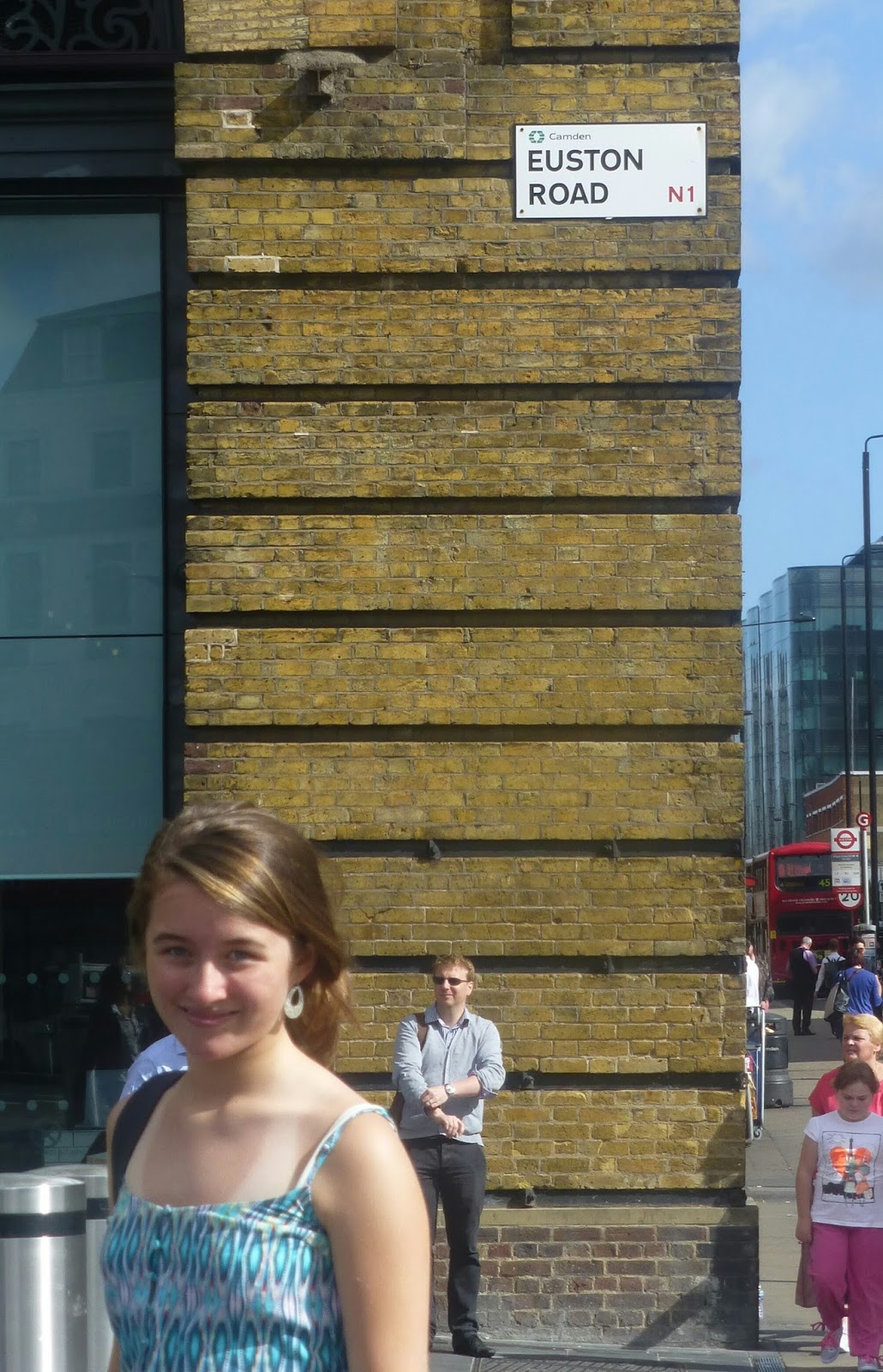
Euston Road

Pentonville Road


Pink Set 
Pall Mall 

Whitehall 

Northumberland Avenue


Orange Set 
Bow Street

Vine Street 


Marlborough Road


Red Set
The Strand
(That is a terrible photo but the street sign does say the Strand  ;))
 Fleet Street


Trafalgar Square


Yellow Set
 Leicester Square


Piccadilly 

Coventry Street


Green Set
Oxford Street


 Bond Street

Regent Street


Blue Set 
Park Lane 


Mayfair
(We couldn't find an actual street sign that said Mayfair so we took several photos to prove that we were actually there :))

Okay, well that is it for this blog post. I hope that you enjoyed it and maybe feel inspired to go and do the Monopoly Challenge as well. I recommend not doing them in the order as they are on the board but instead using a map to check which places are closer to each other and do them in that order. 

For example, we went to Euston Road, Pentonville Road and the Angel Islington first and then went around Central London, to the Strand, Trafalgar Square, Bow Street, Pall Mall, Mayfair, Park Lane, Bond Street, Oxford Street, Piccadilly, Regent Street, Coventry Street, Whitehall, Northumberland Avenue and Leicester Square. Whitechapel Road, Fleet Street, Marlborough Road, Vine Street and Old Kent Road are a little more spread out and in slightly more obscure places and we did those last. 

Anyway, have fun!


Clare